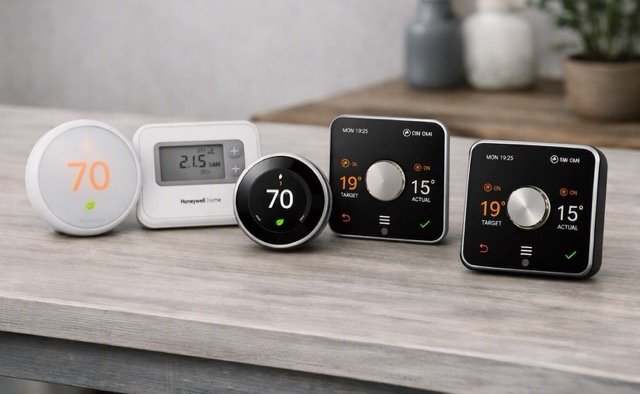

Smart thermostats have become one of the easiest ways to make a home more efficient. They help you understand how your heating behaves, reduce wasted energy, and give you control from anywhere. After exploring several of these systems in real UK homes, here’s a concise look at the standout options — each with its own strengths, quirks, and ideal use cases.
Google Nest Learning Thermostat (Gen 4)
Core Personality: Intelligent, polished, hands‑off Best For: Hands‑off automation

Google Nest Learning Thermostat, 3rd Generation, White, Wi-Fi, Modern Style, HVAC Control, Thermostat
Main Specs
- Learning‑based scheduling
- Remote control via Google Home app
- Farsight proximity display
- Auto‑away detection
- Eco mode
- Works with most boilers via Heat Link
Pros
- Premium build and feel
- Learns routines naturally
- Smooth, intelligent heating
- Excellent app experience
Cons
- Not officially sold in the UK
- Limited multi‑zone support
Nest Thermostat E
Core Personality: Lightweight, simple, unobtrusive Best For: Small flats

Home Thermostat - T4000ES Learning Thermostat E - White
Main Specs
- Frosted display
- Basic scheduling
- Remote control
- Works with Google Home
- No C‑wire required
- Lightweight design
Pros
- Affordable
- Easy installation
- Minimalist design
Cons
- Screen visibility can be poor
- Fewer advanced features
Hive Thermostat
Core Personality: Straightforward, predictable, UK‑friendly Best For: Busy households
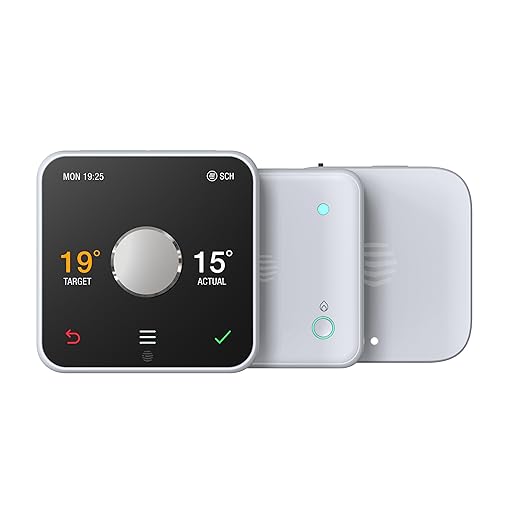
Hive Smart Thermostat for Combi Boiler Heating Systems | Includes Hive Nano 3 Hub | OpenTherm Compatible
Main Specs
- Touchscreen interface
- Hive app control
- Scheduling and boost mode
- Works with Hive Hub
- Optional smart radiator valves
- Strong UK boiler compatibility
Pros
- Very easy to use
- Strong UK boiler compatibility
- Reliable day‑to‑day performance
Cons
- Full setup can get expensive
- Requires Hive Hub
Drayton Wiser
Core Personality: Practical, modular, excellent value Best For: Older UK homes

Drayton Wiser Smart Thermostat Heating Control Heating Only - Works with Amazon Alexa, Google Home and IFTTT
Main Specs
- Modular system
- Smart radiator valves
- Wiser app with scheduling
- Open Window Detection
- Works with Alexa, Google, HomeKit
- Multi‑zone support
Pros
- Great value
- Easy to expand
- Strong UK compatibility
Cons
- Valves can be noisy
- App lacks deeper analytics
Honeywell Evohome
Core Personality: Powerful, highly customisable, multi‑zone expert Best For: Large homes

Honeywell Home T6 Wired Smart Thermostat - Black - Touchscreen Heating Control with Geofencing, Alexa, Apple & Google - 868 MHZ - Easy Install & App Setup...
Main Specs
- Full multi‑zone control
- Smart radiator valves
- Underfloor heating support
- Colour touchscreen controller
- Works with most boilers
- Extensive scheduling options
Pros
- Best‑in‑class zoning
- Highly customisable
- Works with complex setups
Cons
- Expensive
- Time‑consuming to install
Honeywell Home X2S
Core Personality: Smart‑home‑friendly, flexible, future‑proof Best For: Mixed smart homes
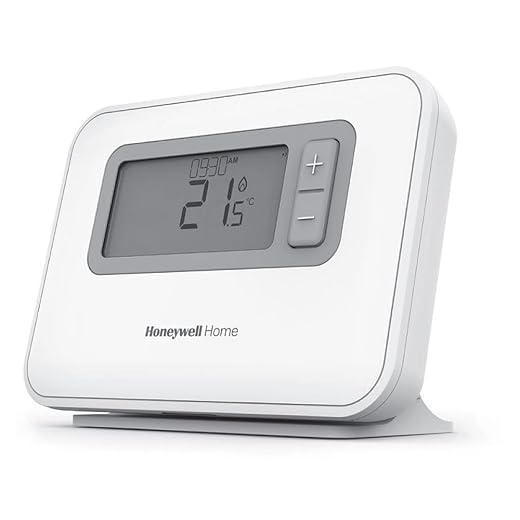
Honeywell T3R Y3H710RF0053 Wireless Thermostat 7 Day Programmable & Receiver
Main Specs
- Matter support
- Works with Alexa, Google, HomeKit
- Occupancy detection
- Detailed scheduling
- Holiday and eco modes
Pros
- Excellent smart home compatibility
- Strong automation
- Clear scheduling tools
Cons
- Requires C‑wire
- Limited UK availability
Best Smart Thermostat for Each Type of Home
Small flats Nest Thermostat E — simple, unobtrusive, and easy to install.
Busy households Hive Thermostat — predictable, reliable, and designed for UK boilers.
Large homes Honeywell Evohome — unmatched multi‑zone control.
Older UK homes Drayton Wiser — radiator valves help balance uneven heating.
Tech‑heavy smart homes Honeywell Home X2S — Matter support and broad compatibility.
Hands‑off automation Nest Learning Thermostat — learns your habits and adjusts automatically.
Frequently Asked Questions
Do smart thermostats work with combi boilers? Yes, most modern smart thermostats are designed for UK combi boilers.
Will a smart thermostat reduce my heating bills? It can, especially if you use scheduling, zoning, and eco modes effectively.
Can I install a smart thermostat myself? Some models allow DIY installation, but older boilers may require a professional.
Do I need smart radiator valves? Only if you want multi‑room zoning or more precise temperature control.
Does a smart thermostat work without Wi‑Fi? Basic heating still works, but remote control and automation features will be limited.
Can smart thermostats control hot water? Some can, depending on your boiler and the thermostat system.