
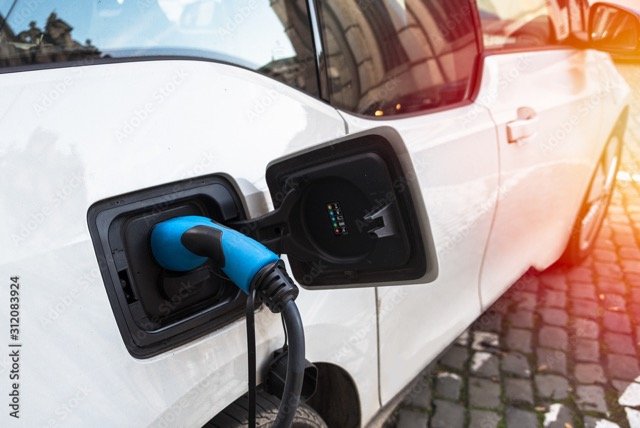

If you’ve just gone electric, installing a smart wallbox at home is the fastest way to make EV ownership more affordable, quieter, and kinder to your energy bills. In this article, I’ll walk you through the home EV charger grant UK, the EV charger installation rules you need to know in 2026, and my top picks for the best home EV charger UK. We’ll also cover how to squeeze maximum value from smart charging tariffs in the UK and why a 7kW wallbox in the UK is the sweet spot for most households.
Public rapid charging is fantastic on long trips, but it can be busy, pricier at peak times, and not always near home. Meanwhile, a home EV charger lets you plug in overnight, wake up to a full battery, and avoid queue anxiety. Better still, modern wallboxes are smart: they talk to apps, schedule around off‑peak tariffs, and can even prefer your solar surplus. Put simply, home charging turns your EV into a routine, not a chore.
However, the UK rules changed recently—and for the better. In 2025, the government removed planning permission requirements for most private EV chargepoints, streamlining installations for homeowners and businesses. Combined with OZEV grants that still help flat owners and renters with up to £350 off eligible installs, the environment for home EV charging in 2026 is both simpler and more affordable.
OZEV Grants & UK Rules: What’s Changed and Who Qualifies
Home EV Charger Grant UK (OZEV, 2026)
- Grant value: Up to £350 (or 75% of purchase/installation, capped at £350) for eligible residential settings. The current grant focuses on flats/apartments and rental properties rather than owner‑occupied houses.
- Eligibility essentials:
- You live in a flat or rented property with off‑street parking.
- The EV (or PHEV) is OZEV‑approved (owned or leased for ≥6 months).
- Installation must be by an OZEV‑approved installer.
- Process in brief: Your installer confirms eligibility, fits an approved chargepoint, and claims the grant on your behalf—you pay the remainder on the invoice.
Tip: If you own a house (not a flat), you generally won’t qualify for the residential EV chargepoint grant in 2026—but you may still benefit from Workplace Charging Scheme support if you’re installing at business premises.
EV Charger Installation Rules (UK, 2026)
- Planning permission: No longer required for most residential installs (private driveways/off‑street parking), significantly shortening the time to installation. Listed buildings/conservation areas or unusual mounting situations may still need checks.
- Smart charging compliance: UK Smart Charge Point Regulations require features such as scheduling, default off‑peak settings, and user override; the goal is grid‑friendly, flexible charging. Many mainstream wallboxes already comply.
- Electrical safety: Expect installers to follow BS 7671 wiring regs; PEN fault protection (no earth rod) and RCD/RCBOprotections are common in modern units.
- Typical costs: A standard 7kW home charging package (unit + installation) can cost £800–£1,200, with grant-eligible installations falling into £450–£850 ranges, depending on the scope/complexity.
Smart Tariffs & Real Savings

Smart EV tariffs such as Intelligent Octopus Go automatically schedule your charging for the cheapest, greenest hours, typically giving you at least six hours of low overnight rates (with bonus cheap slots at times of high renewable generation). You’ll need a smart meter and a compatible EV or charger; the app handles scheduling so your car is ready when you specify. Rates vary by region and time, but the structure is designed to substantially reduce home-charging costs compared to standard tariffs.
👇 Click to get an Octopus Smart EV Tariff Deal
📤 Intelligent Octopus Scheme Overview + Introduction
Tech Wellbeing Octopus Electric Vehicles Partnership.
Tech Wellbeing is proud to recommend the 100% electric vehicle salary sacrifice scheme from Octopus Electric Vehicles.
What is the Octopus Electric Vehicles salary sacrifice scheme?
A salary sacrifice car scheme is an employee benefit that lets your team access a range of electric vehicles at no upfront cost.
Octopus EV salary sacrifice car scheme offers a number of tax and personal benefits savings for the employee who pays for their electric vehicle from their gross salary before tax.
Your team can save up to 40% on the monthly cost of a brand-new EV, while boosting your sustainability credentials with zero set up cost for your business. Plus, it’s open to companies of all shapes and sizes.
You and your team get everything you need to hit the road from Octopus Electric Vehicles: car, charger, energy. The lot.
Want to find out more? Click here to register your interest
Employer Focus + Benefits:
How does it work?
You, as a business, sign up to the scheme to provide it as an employee benefit to your team. Your team pays for a brand new EV from their gross salary, helping them save on National Insurance and Income Tax. As a business, you recover some **of the cost through the employee’s gross pay.
Why is Octopus EV salary sacrifice great for your company?
Hit your net zero targets and show both your team and your customers that you care about fighting climate change. On average, a business saves 8.2 tonnes per year with EV salary sacrifice.
It boosts your benefits package. 75% of employees say that they’re more likely to stay at their work because of their benefits package.
Pay less National Insurance. Your business saves on National Insurance, which many opt to put back into the scheme.
Minimal risk with built-in early-termination protection for unforeseen circumstances.
Your team gets the complete EV package. The car, charger, energy, insurance (subject to eligibility), servicing, maintenance, breakdown and tyres. The lot. That includes a free home charger with standard installation, plus 4,000 miles of free home charging.
No off-street parking? No problem. You can get 4,000 free miles of credit on Octopus Electroverse. Check out the full T&Cs for these charging offers here.
Bespoke Events for your team. Octopus EV organises bespoke events to help your team experience the world of EVs and give you everything you need to promote the scheme.
4.8 stars on Trustpilot. Octopus EV are rated as excellent for always giving impartial EV advice and dedication to customer care.
Want to find out more? Click here to register your interest
Employee Focus + Benefits:
How does it work?
You get to drive a brand-new EV as a benefit from your employer, through one easy monthly payment. You pay for your new EV from your gross salary, saving you money on National Insurance and Income Tax.
What makes Octopus EV salary sacrifice great for the employee?
Get the whole EV package In one simple monthly payment, you get access to a brand new EV, access to great charging offers, insurance (subject to eligibility), breakdown cover, maintenance and servicing and tyre replacement
Ordering is hassle free The Octopus EV team is on hand to help you pick the perfect EV. They’re rated 4.8 on Trustpilot, so you’re in safe hands
No upfront deposit required Plus no hidden surprises or fees. Everything you need is covered in one monthly payment for peace of mind.
Cut your carbon emissions Drivers can save up to 2.7 tonnes of carbon per year vs. a petrol car
Living with an EV is cheaper than a petrol or diesel car Over a quarter of Octopus Electric Vehicles’s drivers said they save £150 a month on fuel costs compared to their last petrol or diesel car
Want to find out more? Click here to register your interest
Top 5 EV Charger Models
We’ve selected 5 smart wallboxes that cater to different budgets and needs; the list combines premium smart chargers with excellent value picks.
Wallbox Pulsar Max (7.4 kW, Type 2, Wi‑Fi/Bluetooth)
The Wallbox Pulsar Max combines sleek aesthetics with smart functionality. Its compact design fits neatly on any wall, and the choice between tethered or socket versions adds flexibility. With dynamic load management, the Pulsar Max is ideal if you want fast 7.4 kW charging, accompanied by a sleek app and neat hardware.

Usage Experience & Performance:
Charging is consistent at 7.4 kW, and the myWallbox app makes scheduling and monitoring easy. Voice control via Alexa and Google Assistant adds convenience. However, solar integration requires extra hardware, and firmware updates occasionally cause minor disruptions.
Solar Integration:
Available but requires additional components, making it less plug-and-play for solar users.
Reliability:
Solid build quality with IP55 weatherproofing, though occasional app connectivity issues have been reported.
Tethered Design:
Available in both tethered and untethered versions, with cable lengths up to 7m for added flexibility.
MyEnergi Zappi (7 kW/22 kW, solar‑aware, tethered/untethered)
The Zappi is the gold standard for solar integration, designed for homes with PV or wind systems. Its Eco and Eco+ modes prioritise renewable energy, making it the most eco-friendly charger on the market.

Usage Experience & Performance:
Charging is efficient at 7 kW, and the app provides detailed energy monitoring. The LCD screen offers easy on-device control, which is a nice touch compared to app-only chargers.
Solar Integration:
Unmatched in this category, with multiple modes to maximize green energy usage.
Reliability:
Robust design with IP65 rating and built-in PEN fault protection. Slightly bulkier than competitors but extremely durable.
Tethered Design:
Available in both tethered and untethered versions, with a standard 6.5m cable for tethered models.
Hypervolt Home Pro (7.4 kW, tethered, tariff‑smart with LCD)
The Hypervolt Home 3 Pro is a premium UK-made charger that blends high-end design with advanced smart features. Its IP66 rating ensures durability in all weather conditions, and the LED customisation adds a modern touch.

Usage Experience & Performance:
Charging is fast and reliable at 7.4 kW, and the app experience is polished. Solar integration is seamless, with modes like Eco, Super Eco, and Boost for renewable energy optimization. Integration with smart tariffs like Octopus Intelligent Go makes it a favorite for cost-conscious EV owners.
Solar Integration:
Built-in solar modes make it one of the best options for green energy users.
Reliability:
Excellent build quality and strong customer support. Occasional app connectivity issues are rare.
Tethered Design:
Comes with a 5m cable (optional 7.5m or 10m), offering flexibility for different driveway layouts.
Masterplug Smart EV Home Wall Charger (7.4 kW, tethered/socketed)
The Masterplug Smart EV charger is designed for simplicity and affordability without sacrificing essential smart features. Its 7.4 kW output ensures efficient overnight charging, and the 5m tethered Type 2 cable offers plug-and-go convenience. Built with PEN fault protection and integrated RCDs, it’s a safe and compliant choice for UK homes.

Usage Experience & Performance:
Charging is smooth and reliable, delivering up to 30 miles of range per hour. The unit feels solid and weather-resistant, thanks to its IP55 rating. While the app interface is functional, it’s not as polished as premium alternatives, and Wi-Fi connectivity can drop occasionally in weak signal areas.
Solar Integration:
Solar-ready out of the box with an included CT clamp, allowing you to maximize renewable energy without extra costs.
Reliability:
Built for durability with UV-stabilized casing and integrated safety features. Occasional app glitches are the only minor drawback.
Tethered Design:
The fixed 5m cable makes daily charging effortless, though it limits flexibility for larger driveways.
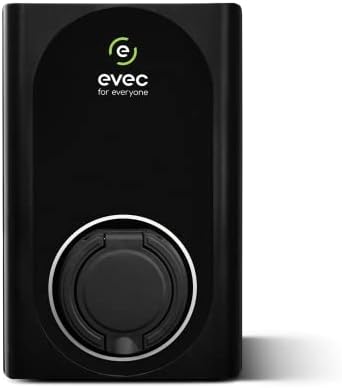
EVEC VEC01 (7.4 kW, untethered, Type 1/Type 2)
A low‑cost, untethered UK charger with Type 1 & Type 2 support—ideal for mixed EV households or those who prefer swapping cables. Smart app (evec) with OCPP, PEN protection, and adjustable power.
Usage Experience & Performance:
Charging is reliable at 7.4 kW, with adjustable power settings for homes with limited capacity. The app is functional but lacks advanced features found in premium models.
Solar Integration:
Not supported, making it less suitable for eco-focused users.
Reliability:
Solid build with IP55 weatherproofing. Occasional app connectivity issues reported but generally stable.
Tethered Design:
Untethered only, so you’ll need to provide your own Type 2 cable.
Bonus: Tesla Wall Connector (Type 2, up to 22 kW)
The Tesla Wall Connector (Gen 3) is now Type 2 universal, supporting single-phase 7 kW or three-phase up to 22 kW, and integrates deeply with the Tesla App. A sleek option for Tesla drivers or anyone wanting 22 kW readiness (with 3‑phase supply).
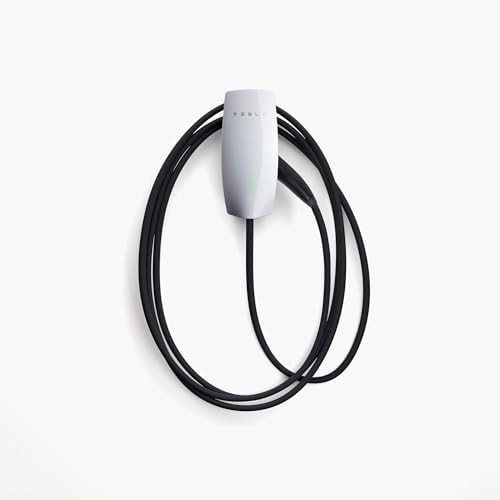
- Wall Connector is Tesla’s most convenient charging solution for Tesla and non-Tesla electric vehicles. The lightweight d…
- Compatible with any Type 2 charge port
- Schedule, manage and track charging from the Tesla app
- Wi-Fi connectivity for over-the-air firmware updates
- Up to 71 km of range per hour and up to 22 kW with three-phase charging grids
- Power sharing to support multiple Wall Connectors
EV Charger Comparison Table
Pricing & Value: What to Expect in 2026
- Wallbox costs (unit only): Quality 7 kW chargers typically sit £450–£800; premium design‑led units (e.g., Andersen A2) start at £1,199 hardware only.
- Installed prices: Full installation packages for 7 kW are often £800–£1,200 , depending on the cable run, earthing, consumer unit upgrades, and any civil works. With OZEV grants, eligible flats/rentals can see totals £450–£85
- ROI with smart tariffs: Charging on off‑peak rates can save hundreds per year, and solar households may see even greater savings by self‑consuming rather than exporting. (Zappi’s ECO modes and Masterplug’s Monta app help here.)
Conclusion & Buying Advice
Which charger should you choose?
- You want the “balanced smart” choice: Wallbox Pulsar Max. Compact, capable, and excellent app control. It’s a safe bet for most UK homes.
- You have solar (or plan to soon): MyEnergi Zappi. Its ECO modes and PV integration are a game‑changer for bill savings.
- You live by your tariff: Ohme Home Pro. Smart scheduling and cost optimisation are embedded in the product DNA.
- You want the lowest cost on Amazon: Masterplug Smart EV. Solid features, widely available, terrific deals during sales.
- You need Type 1 flexibility: evec VEC01. Affordable, untethered, Type 1 & Type 2 support.
Pre‑purchase checklist.
- Supply: Confirm single‑phase (7.4 kW) vs three‑phase (22 kW). Most UK homes are single‑phase.
- Parking: Ensure a dedicated off‑street location and a safe cable run to the consumer unit.
- Grant: If you’re in a flat or rented property, check OZEV grant eligibility for up to £350 saving.
- Connectivity: Choose Wi‑Fi or wallboxes with 4G fallback (e.g., Ohme) depending on your signal.
- Tariff: Consider moving to smart off‑peak tariffs for bigger annual savings.
- Installer: Use OZEV‑approved professionals for compliance and peace of mind.
FAQs
Who can claim the home EV charger grant in the UK?
Primarily flat owners/leaseholders and private renters with off‑street parking; grant covers up to £350 or 75% of costs (cap applies). Installation must be by an OZEV‑approved installer.
Do I need planning permission for a home wallbox now?
Not in most cases. The UK removed planning permission requirements for many EV chargepoint installs across private driveways/off‑street parking in May 2025; specific sites (e.g., listed buildings) may still need checks.
Is 7.4 kW fast enough?
Yes. A 7.4 kW (single‑phase) wallbox typically adds ~30 miles of range per hour, refilling most EVs overnight. It’s the standard for UK residential supplies.
What’s the difference between tethered and untethered?
Tethered includes a fixed cable—just plug in. Untethered uses a universal socket: you plug your own cable, which keeps the install tidier (handy for mixed Type 1/Type 2 households).
How much does a home EV charger cost to install?
Typical £800–£1,200 for 7 kW, inclusive of unit + standard installation. With OZEV grants, eligible installs can drop to £450–£850.
Which charger is best with solar panels?
MyEnergi Zappi offers dedicated ECO modes to divert surplus PV/wind energy to your EV, maximising self‑consumption.