
If you live in a UK flat, ironing usually means clearing a corner of the kitchen counter or hauling out a full ironing board for one shirt. Handheld garment steamers promise a quicker fix — and, increasingly, something more: the ability to refresh clothes, reduce odours, and kill bacteria using hot steam, without detergent or dry cleaning.
That all sounds spot on, but in reality many popular models start to disappoint after a few weeks. Tanks begin to leak, triggers loosen, steam output drops, and what started as a time‑saver becomes another faffy appliance you avoid using.
I’ve tested handheld garment steamers the way people actually use them in the UK: rushed weekday mornings, small kitchens, hard‑water areas, and repeated short sessions on shirts, knitwear, and outer layers. While most steamers can freshen fabric — and many claim to kill up to 99.9% of bacteria through heat — the real difference shows up over time: consistency, build quality, and whether they still perform once the novelty wears off.
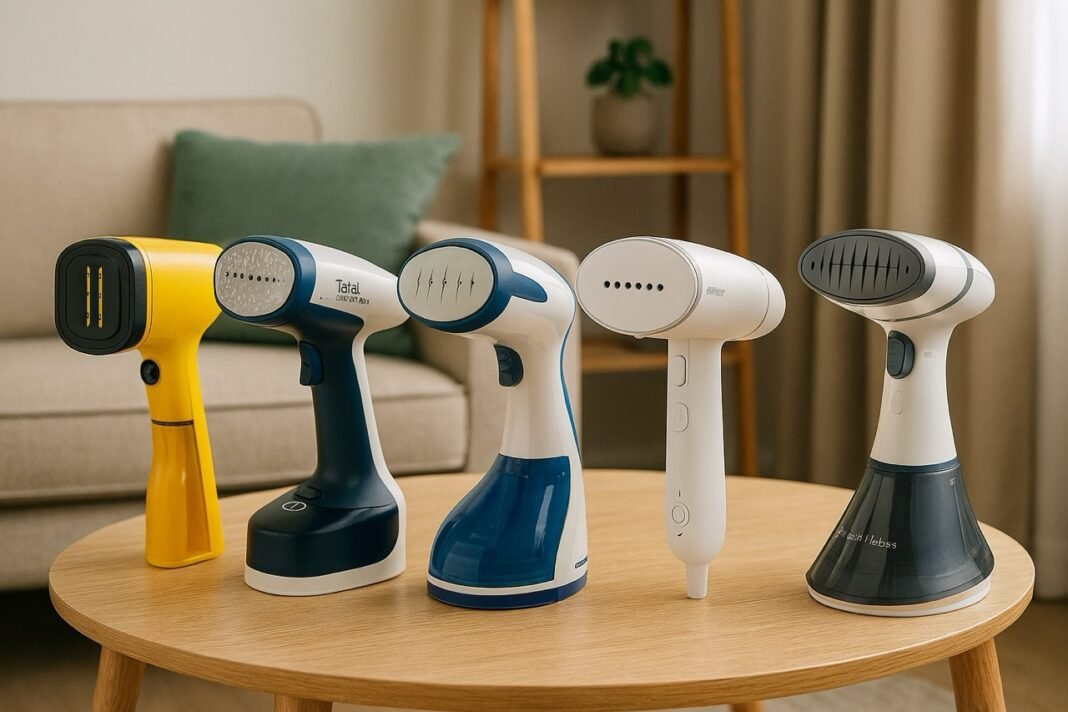
After testing dozens of best‑selling options on Amazon UK, I’ve narrowed it down to five handheld garment steamers that genuinely hold up in UK homes. These are the models buyers don’t regret — sensibly sized for small spaces, dependable on standard UK plugs, effective for both crease‑removal and fabric refreshing, and built well enough to feel like a proper long‑term buy rather than a disposable gadget.
Why Steam Refreshes Clothes
Steam refreshes clothes by combining high heat and moisture, which relaxes fabric fibres, releases odours, and helps reduce bacteria that build up through everyday wear. Unlike ironing, steam doesn’t press dirt or residue deeper into the fabric — it works more gently, making it especially useful for items that aren’t ready for a full wash.
Most handheld garment steamers generate steam hot enough to freshen clothes and reduce common odour‑causing bacteria on the fabric surface. This is particularly helpful for garments worn briefly, like work shirts, knitwear, or jackets, where washing after every use would be unnecessary and hard on the fibres.
Steaming won’t replace proper laundering for heavily soiled clothes, but for day‑to‑day freshness, fabric care, and keeping clothes hygienic between washes, it’s a quick, low‑effort alternative that fits well into busy UK households.
In short: Steam refreshes clothes by relaxing fibres, neutralising odours, and reducing surface bacteria — all without detergents, friction, or long wash cycles.
The Top 5 Handheld Garment Steamers
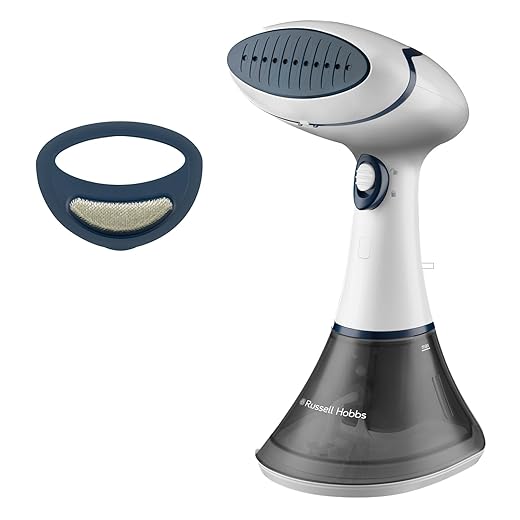
Russell Hobbs Steam Genie (25591) – The Category King
Straight out of the box, this feels reassuringly no‑nonsense. It’s not flashy, but the weight is well judged, and the handle doesn’t flex or creak when you give it a squeeze — a small thing that quickly separates the serious options from the flimsy ones. After a fortnight of weekday use on work shirts and the odd jumper, it still behaves exactly as it did on day one.
What really stood out over time was consistency. The steam button hasn’t gone spongy, the tank clicks back into place with a solid fit, and it doesn’t start dribbling water if you pause mid‑session. This is the sort of steamer you stop thinking about — and that’s a compliment. It just gets on with the job, morning after morning, without turning into another appliance you quietly resent.
Key Features
- Ready in about 45 seconds — dependable for busy mornings
- 200 ml removable tank — enough for 2–3 shirts per fill
- 1,600 W output — strong, steady steam without spluttering
Why it’s a Winner
- The handle feels significantly sturdier than cheaper rivals
- Steam stays consistent even as the tank level drops
- Casing resists scuffs when shoved into cupboards
The Trade‑offs
- Power cable is on the shorter side, so you’ll stay near a socket
- Slightly heavier than ultra‑compact travel models



The Verdict
The safest all‑round choice if you want to replace ironing for everyday clothes.
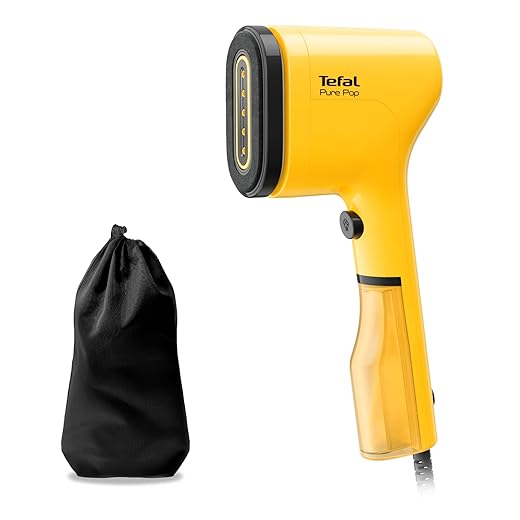
Tefal Pure Pop Slim (DT2024) – Best for Small Flats & Travel
The immediate reaction here is how slim and lightweight it feels — more like a chunky hairdryer than a traditional steamer. It’s clearly designed for small spaces, and after weeks of living in a kitchen drawer, it still looks tidy rather than scratched and tired.
Daily use quickly shows its priorities: speed and convenience. It heats almost instantly (barely time to hang the shirt), and the narrow handle stays comfortable even when steaming vertically. The small tank means you’ll refill more often, but it never leaks, never spits, and never feels cheap in the hand. For compact flats, that reliability really matters.
Key Features
- 15‑second heat‑up — practically instant
- Ultra‑slim body — drawer‑friendly in small kitchens
- Lightweight — easy on the wrist
Why it’s a Winner
- No drips or condensation marks
- Excellent on synthetics and light cotton
- Ideal for travel or student flats
The Trade‑offs
- Small tank empties quickly on thick fabrics
- Not designed for long steaming sessions

The Verdict
Perfect if space is tight and you want speed above everything else.
Philips 3000 Series (STH3020/16) – Best Build Quality
First Impression
This one immediately gives off “proper appliance” vibes. The plastics feel thicker, the joins are neat, and nothing rattles when you move it around. After folding and unfolding the handle countless times, the hinge is still firm — no wobble developing, which is where a lot of foldable designs fall down.
In everyday use, it feels controlled rather than aggressive. Steam comes out evenly, the plate glides smoothly, and there’s none of that sudden wet blast that can ruin a delicate shirt front. It doesn’t shout about itself, but living with it shows just how well thought‑through it is.
Key Features
- Around 30‑second heat‑up
- Foldable handle for easy storage
- Even steam distribution
Why it’s a Winner
- The heated plate glides cleanly over seams
- No condensation splatter on delicate fabrics
- Feels built to last rather than be replaced
The Trade‑offs
- Steam output is gentler than the Russell Hobbs
- Costs a bit more for the same wattage


The Verdict
Best for anyone who values durability and refinement over brute force.
BEAUTURAL Handheld Steamer – Best Budget That Actually Lasts
This one sets expectations low — plain design, basic plastics, no unnecessary gimmicks. But after a few weeks of regular use, what stands out is how little it degrades. The tank stays clear, the steam remains strong, and nothing starts wobbling or leaking.
It’s not elegant, and the trigger has a slightly clunky feel compared to premium models, but it doesn’t develop annoying habits. No sudden drop in steam, no internal rattles, no dramatic limescale tantrums. For the price, that steadiness is impressive.
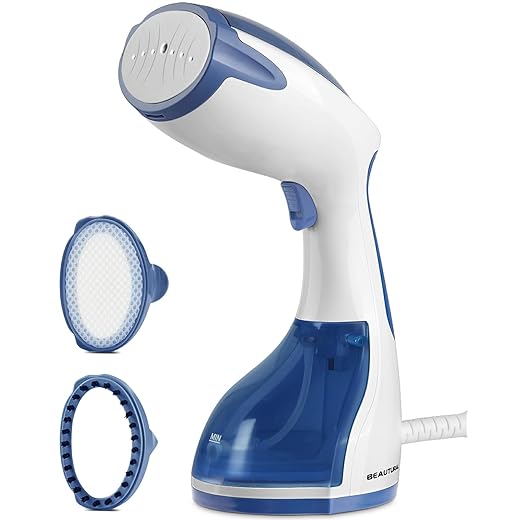
BEAUTURAL Clothes Steamer, Portable Handheld Steamer, Garment Fabric Wrinkles Remover, 30-Second Fast Heat-up, Auto-Off, Large Detachable Water Tank, Dark Blue
Key Features
- Around 30‑second warm‑up
- Large detachable tank (about 260 ml)
- Auto shut‑off for safety
Why it’s a Winner
- Strong steam output for the money
- Simple controls, less to go wrong
- Tank holds enough for several garments
- Foldable to reduce the space.
The Trade‑offs
- Finish marks more easily
- Trigger feels less refined

The Verdict
A rare budget buy that doesn’t feel disposable after a month.
Tefal Access Steam Easy (DT7170) – Premium Light‑Use Choice
This feels like a carefully polished steamer rather than a powerful one. The weight distribution is well judged, and the steam head shape naturally guides you towards collars, buttons, and pleats.
Over time, it stays pleasant to use. It heats quickly, doesn’t spit when reheating, and feels comfortable even during longer sessions. It’s not meant to handle a full week’s laundry — and it doesn’t pretend to. Used within its limits, it stays smooth and frustration‑free.
Key Features
- 15‑second heat‑up
- Up to 25 g/min steam output
- Door hook included
Why it’s a Winner
- Precise steam head for detail work
- Lighter than it looks
- No dripping between bursts
The Trade‑offs
- Expensive for occasional use
- Not ideal for heavy denim or thick fabrics


The Verdict
Best for smart clothes and light fabrics when presentation matters.
Comparison Table
Traditional Iron vs Handheld Garment Steamer: What’s the Difference?
A traditional iron relies on direct heat and pressure to press creases flat, which works well for crisp finishes but often requires an ironing board, more setup time, and careful temperature control. A handheld garment steamer works differently: it uses hot steam to relax fabric fibres, allowing creases to fall out naturally while also refreshing clothes by reducing odours and surface bacteria.
Steamers are generally gentler on delicate fabrics, quicker to use for everyday touch‑ups, and better suited to small homes, while irons still have the edge for sharp creases and heavily wrinkled cotton or linen.
UK Buyer’s Guide: What Actually Matters
UK realities
All five models run safely on standard UK 230 V sockets and draw between 1,300–1,600 W. Used for short bursts, they typically cost around 30–45 pence per hour to run, depending on your tariff.
Hidden costs
Hard water is the silent killer. In limescale‑heavy areas, using filtered or distilled water will noticeably improve lifespan, especially on cheaper models.
Avoid the cheap trap
Ultra‑cheap steamers often lose pressure within weeks. Buying twice costs more than buying sensibly once.
Final Summary: Which One Should You Click?
If you want the safest all‑round buy, go for the Russell Hobbs Steam Genie.
Short on space or travelling often? Tefal Pure Pop Slim makes sense.
Spending carefully? BEAUTURAL is the budget option that won’t let you down.
Frequently Asked Questions
Is a handheld garment steamer loud?
No — most are quieter than a kettle and won’t disturb neighbours.
Can I use tap water in the UK?
Yes, but filtered water helps in hard‑water areas.
Will it fully replace ironing?
For shirts, tees, dresses, and knitwear — largely yes. For knife‑sharp creases, no.
How long do they last?
A good model lasts 2–4 years with regular use.
Are they safe for silk and wool?
Yes, as long as you keep the steamer moving.