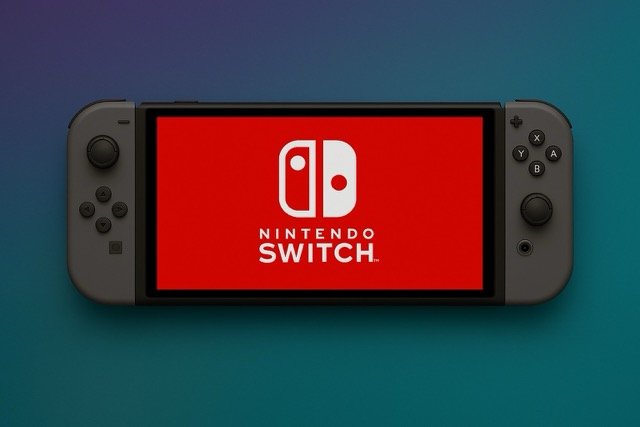

Nintendo’s follow‑up to the best‑selling hybrid console is here. The Nintendo Switch 2 brings a bigger screen, faster internals, smarter controllers and modern social features—without losing the pick‑up‑and‑play charm that made the original a phenomenon. This UK‑focused guide covers verified specs, day‑to‑day experience, pros & cons, buying tips, a comparison table vs Switch OLED and Steam Deck, a verdict.
Key facts in this guide are drawn from Nintendo’s official materials and reputable tech outlets
What’s New (and Why It Matters)
- Bigger, sharper handheld play. A 7.9‑inch 1080p LCD supports HDR10 and variable refresh up to 120Hz in handheld/tabletop mode, making fast‑motion games look far smoother than before.
- 4K TV output. Docked, Switch 2 can output up to 4K at 60fps—a first for Nintendo’s hybrid.
- Modern silicon. A custom NVIDIA Tegra T239 (Ampere) with 12GB LPDDR5X RAM delivers substantially higher performance, DLSS upscaling and even ray‑tracing support in select titles.
- Joy‑Con 2 updates. Magnetic attachment, refined ergonomics and a mouse sensor unlock new control schemes for strategy and shooters.
- Social built in. GameChat (voice/video) and GameShare (friend screen share/co‑play for compatible games) are integrated at system level.
- Storage and connectivity. 256GB UFS internal storage, microSD Express up to 2TB, Wi‑Fi 6, Bluetooth, two USB‑C ports on the console and HDMI 2.1/Gigabit Ethernet on the dock.

Display: 7.9″ LCD, 1920×1080, HDR10, VRR up to 120Hz (handheld)
TV Output: Up to 3840×2160 at 60fps (docked)
Processor/RAM: NVIDIA T239 (Ampere), 12GB LPDDR5X
Storage: 256GB UFS, microSD Express (to 2TB)
Wireless: Wi‑Fi 6, Bluetooth
Ports: 2× USB‑C on console; dock adds HDMI 2.1, Ethernet
Battery: 5220mAh; rated ~2–6.5 hours depending on game/settings
Backward compatibility: Broad support for Switch 1 games; some titles require updates or show minor issues.
Real‑World Experience: What It’s Like to Use
Handheld comfort & clarity. The jump to 1080p/120Hz handheld play is immediately noticeable in racing, platformers and action games. Colours are vibrant for an LCD, and HDR helps highlights pop—even if it isn’t quite as inky as the Switch OLED’s panel.
Performance & load times. The Ampere-based SoC, faster memory, and a hardware decompression engine reduce loading and increase frame rates. Many Switch 1 titles feel “new” again—some receive free performance patches, others simply run better out of the box.
Battery reality. Expect 2–6.5 hours depending on refresh rate, brightness and game intensity. Heavy 120Hz sessions or graphically intensive titles can push the frame rate toward the lower end.
Online & social. GameChat is intuitive, with voice chat and optional camera support (USB‑C accessory). During the open‑access period (through 31 March 2026), you can try it without a Nintendo Switch Online sub.
Pros and Cons
Pros
- Bigger 7.9″ 1080p/120Hz screen with HDR10 for smoother, sharper handheld play.
- 4K60 output via dock; finally matches modern TVs.
- Stronger internals with DLSS; many older games run better.
- Smart Joy‑Con 2 ergonomics + mouse sensor open new control options.
- GameChat/GameShare make online play more social out‑of‑the‑box.
- 256GB base storage + microSD Express up to 2TB.
Cons
- Battery life still lags: intensive sessions can be short.
- LCD, not OLED—great, but less rich than Switch OLED.
- No VRR over HDMI in TV mode (as of writing).
- Launch exclusives remain relatively limited versus total library.
- Storage hungry modern titles; downloads can be large/slow.
UK Buying Advice
- Price watch. UK RRP typically aligns with US pricing; look for bundles around £399–£449 depending on included games/accessories. Track stock from major retailers (Amazon UK, GAME, Argos, Currys, Smyths) and Nintendo UK Store.
- Bundle value. The Mario Kart World bundle offers strong value if you want a day‑one exclusive; buying the game separately costs more.
- Storage plan. If you download frequently, add a microSD Express card (consider 512GB–1TB today, with space to grow).
- Parental controls. Families benefit from granular controls inside the Nintendo Switch Parental Controls app; GameChat permissions for under‑16s require guardian approval.
- Accessories. Prioritise a tempered‑glass screen protector, a fast microSD card, and—if you play docked—a wired Ethernet connection via the dock for steadier online play.
Nintendo Switch 2 vs Switch OLED vs Steam Deck
| Console | Display | Resolution (handheld / TV) | Refresh Rate | Processor | RAM | Storage (base) | Battery | Typical UK Price | Stand‑out Features |
|---|---|---|---|---|---|---|---|---|---|
| Switch 2 | 7.9″ LCD | 1080p / up to 4K60 (docked) | Up to 120Hz | NVIDIA T239 (Ampere) | 12GB LPDDR5X | 256GB UFS (microSD Express) | 2–6.5 hours | £399–£449 | DLSS, HDR10, VRR (handheld), GameChat/Share |
| Switch OLED | 7.0″ OLED | 720p / 1080p (docked) | 60Hz | NVIDIA Tegra X1 | 4GB LPDDR4 | 64GB | 4.5–9 hours | ~£309 | OLED blacks, improved audio |
| Steam Deck OLED | 7.4″ OLED | 800p handheld (no docked 4K native) | Up to 90Hz | AMD APU (Zen 2 + RDNA 2) | 16GB LPDDR5 | 512GB NVMe SSD | 3–8 hours | ~£479 | PC gaming, huge library, mod‑friendly |
Specs/prices compiled from manufacturer pages and UK retail listings; specific prices vary by retailer and timing.
Content You Won’t Find in the Box (But You’ll Feel Daily)
Accessibility & UX. Switch 2 continues Nintendo’s approachable OS with faster UI animations, better capture sharing, and new screenshot/video resolution behaviours (Switch 2 titles capture up to 1080p; legacy titles up to 720p).
Thermals & noise. The console runs cool and quiet; the fan curve rarely distracts even in performance‑heavy titles.
Controller drift concerns. While sensors are improved, long‑term joystick drift remains a possibility based on historical data—keep your warranty handy and consider contact cleaner/repair routes if needed.
Verdict: Who Should Buy Switch 2?
If you primarily play Nintendo exclusives, want handheld 1080p/120Hz, and value the hybrid dock‑to‑TV simplicity, the Nintendo Switch 2 is the best Nintendo experience yet. Its battery life and lack of TV VRR may give power users pause, and PC handhelds still win in raw performance, but the Switch 2’s blend of software catalog, backwards compatibility, and day‑to‑day polish make it the most balanced hybrid console you can buy right now.
FAQs
Is the Switch 2 backward compatible?
Yes—most Switch 1 games work immediately, some need updates, and a small number show minor compatibility issues.
Does it really do 4K?
Yes—up to 4K/60 via the dock. Handheld is 1080p and up to 120Hz
How long does the battery last?
Nintendo rates games at ~2–6.5 hours, depending on the game and settings; expect less time in demanding titles at 120Hz.
Do my old controllers work?
Most Switch 1 controllers connect and function, although Joy-Con 2 features (such as mouse mode) are exclusive.